| [ Team LiB ] |


|
How Errors are ReportedPCI Express includes two methods of reporting errors:
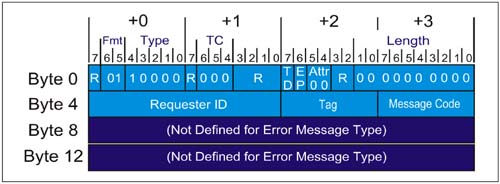
Each reporting mechanism is described below. Error MessagesAs discussed previously, PCI reports errors via the PERR# and SERR# signals. Because PCI Express eliminates theses error-related signals, error messages have been defined to replace these signals by acting as virtual wires. Furthermore, these messages provide additional information that could not be conveyed directly via the PERR# and SERR# signals. This includes identification of the device that detected the error and an indication of the severity of each error. Figure 10-4 illustrates the format of the error messages. Note that these packets are routed to the Root Complex for handling by system software. The message code defines the type of message being signaled. As one might guess, the specification defines three basic types of error messages shown in Table 10-1. Figure 10-4. Basic Format of the Error Messages
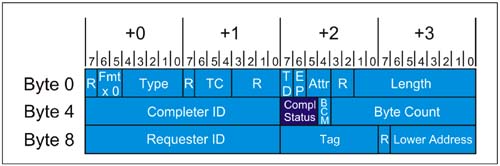
Completion StatusPCI Express defines a completion status field within the completion header that enables the transaction completer to report errors back to the requester. Figure 10-5 illustrates the location of the completion field and Table 10-2 defines the completion values. Note that the shaded status entries represent error conditions that can be reported via error messages. Figure 10-5. Completion Status Field within the Completion Header
|
| [ Team LiB ] |
|