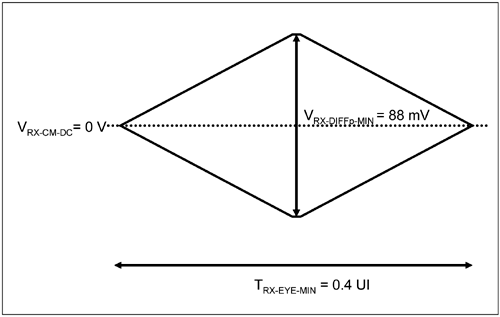
Table 12-2. Input Receiver Characteristics
|
UI | 400.12 | 399.88 | ps | Unit Interval =the bit time. 400ps nominal. |
TRX-EYE | | 0.4 | UI | Minimum eye width from which maximum jitter is derived. JT = 1 - TRX-EYE |
JT | 0.6 | | UI | Maximum jitter spec. |
VRX-DIFFp-p | 1200 | 175 | mV | Peak-to-peak differential voltage sensitivity of receiver. |
VRX-DIFFp | 600 | 88 | mV | Half of VRX-DIFFp-p. |
VRX-IDLE-DET-DIFFp-p | 175 | 65 | mV | This is the electrical Idle detect threshold voltage. Any voltage less than 65mV peak-to-peak implies that the Link is in electrical Idle. |
ZRX-DIFF-DC | 120 | 80 | Ohms | Receiver DC differential mode impedance. 100 Ohms nominal. |
ZRX--DC | 60 | 40 | Ohms | Requires minimum D+ and D- line impedance during all power states. |
ZRX--HIGH-IMP-DC | | 200k | Ohms | Requires minimum D+ and D- line impedance when the receiver terminations do not have power (e.g., in the L2 low power state, or during Fundamental Reset). |
LRX-SKEW | 20 | | ns | Lane-to-Lane skew that a receiver must be able to compensate for. |